What to do in Albany in the winter?

The question recently came up: what to do in the Capital Region in the winter (preferably without spending a small fortune)? WELL. There’s lots to do – if you’re willing to look around. Some ideas…

  1. Your local library is a huge resource! Not only can you sign up for a library card to borrow everything from books to DVDs and electronic books (you can open in a Kindle app) but they also offer free museum passes and free concerts by the Albany Symphony Orchestra – the Colonie Library has an impressive list of digital museum passes available (so you use a code to book your visit time online) and ASO tickets, for example: Museum Passes – Colonie Library. Most Upper Hudson Library System members will probably have a similar list. Also, the library often has a wide variety of events and presentations.
  2. The New York State Museum in downtown Albany is worth a visit if you’ve never been, and they also frequently have special events and presentations for a wide range of audiences. Programs | The New York State Museum
  3. In late November and through December there’s a holiday market at Quackenbush Square; there’s free music, and the Irish American Heritage Museum will also be open giving tours (and possibly music in their theater – they also have free events every couple of weeks). Deck the Hall-bany: Holiday Market and Festival – November 22 Market – Eventeny and Irish American Heritage Museum; also worth checking out the Troy Victorian Stroll
  4. Some local hobby shops have free game nights – Fortress of Gaming on Railroad Ave has a Friday night game night (might be $5?) – Friday Night Boardgaming with the Gaming Knights | Facebook and Bard & Baker is a board game café in Troy that has a trivia night on Sundays – Bard & Baker: Board Game Café.
  5. If you’re interested in ice skating, the Empire State Plaza has a free ice rink and $5 skate rentals (not free, but not expensive) – Empire Skate Plaza
  6. Cross country ski and snowshoe rentals- Not free, but believe it or not the Town of Guilderland offers relatively inexpensive cross-country ski and snowshoes for rent at their parks & rec office for Guilderland residents (Cross Country Ski & Snowshoe Rental Information | Guilderland, NY). The Nature Center at Thacher Park also offers snowshoe rentals (only $5 for 4 hours seems like a pretty good deal to me) – Emma Treadwell Thacher Nature Center – NYS Parks, Recreation & Historic Preservation, as does Five Rivers in Delmar – Five Rivers Environmental Education Center – NYSDEC
  7. Many State parks in the Capital Region have events through the winter- Grafton Lakes, Moreau Lake (they also have very active Friends groups that are always looking for volunteers) – there’s LOTS of locations that do a First Day Hike on January 1st, too, which is a nice way to start the new year – Schoharie Crossing, Olana Historic Site, Peebles Island State Park, etc.
  8. Many towns have a town band that offers free public performances – Colonie Town Band schedule, for example
  9. The Empire State Plaza has a nice tree lighting with fireworks event (December 7th, 2025) – Tree Lighting | Visit the Empire State Plaza & New York State Capitol– there are also free evening tours of the Capitol for the holidays Upcoming Events | Visit the Empire State Plaza & New York State Capitol
  10. Some local historic sites (like Pruyn House, Shaker Heritage Site, Ten Broeck Mansion) and preservation areas (Five Rivers, Mohawk Hudson Land Conservancy, Albany Pine Bush) have open houses and free events through the winter
  11. Local religious organizations have events that are free and open to the public – for example, St. Pius in Loudonville is having a Bach concert series through the winter: Bach Concert Series at St. Pius X Loudonville — St. Pius X Catholic Church – Loudonville, NY

The Canadian Pacific Holiday Train rolls through every year, too – details are on the Holiday Train site .

Slightly further afield, there’s lots to see at the Lake George Winter Carnival in February into March – https://lakegeorgewintercarnival.com/

The Albany area is also a hub for the New York State Canal System, with both the Erie and Champlain canals meeting the Hudson River near Albany. The New York State Canal Corporation offers free events in canal communities year-round, with several events coming up over the winter. Info: https://onthecanals.com/
A driving tour around Cohoes and Waterford: New York’s second largest waterfall, and the Erie Canal

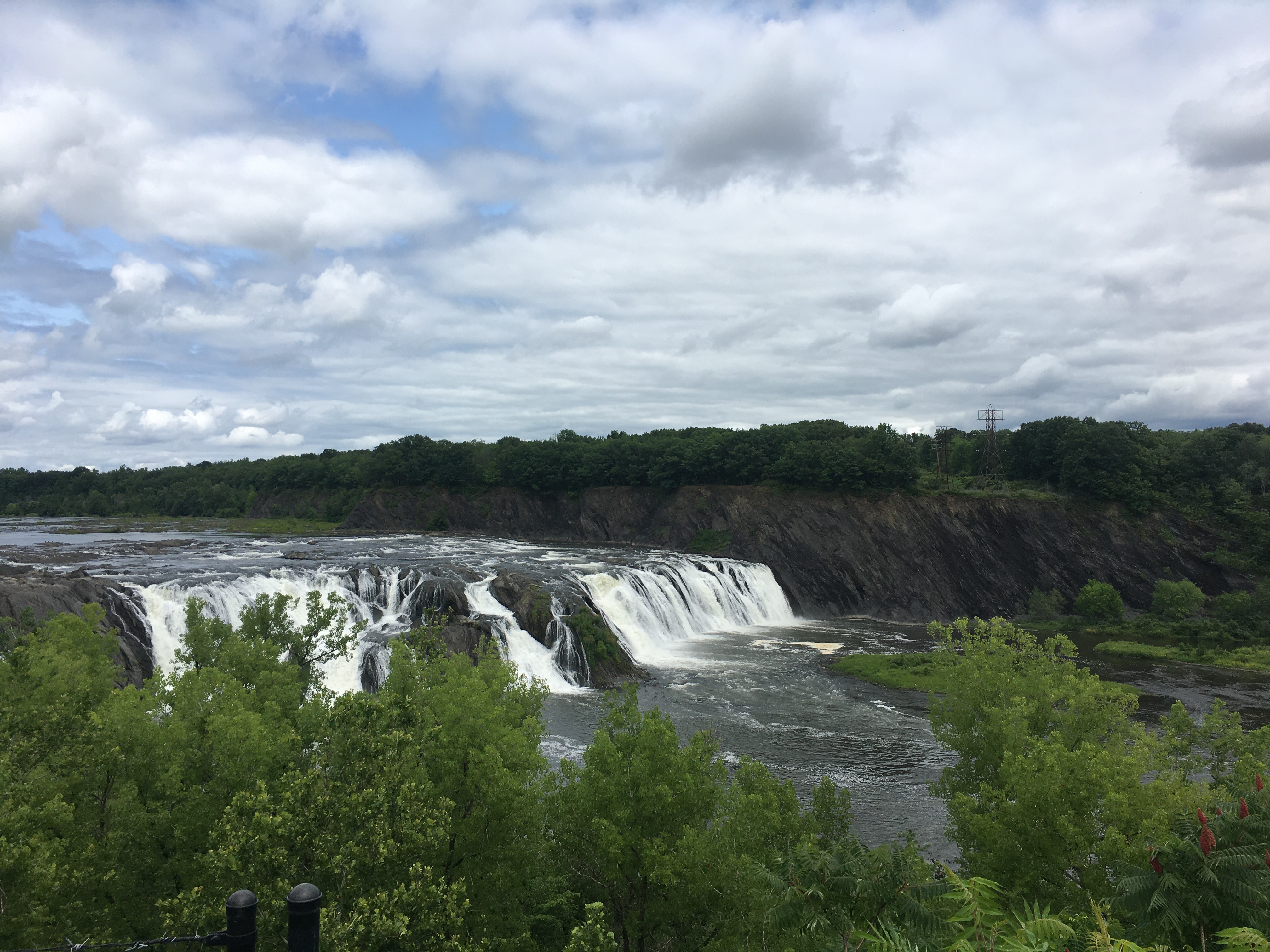
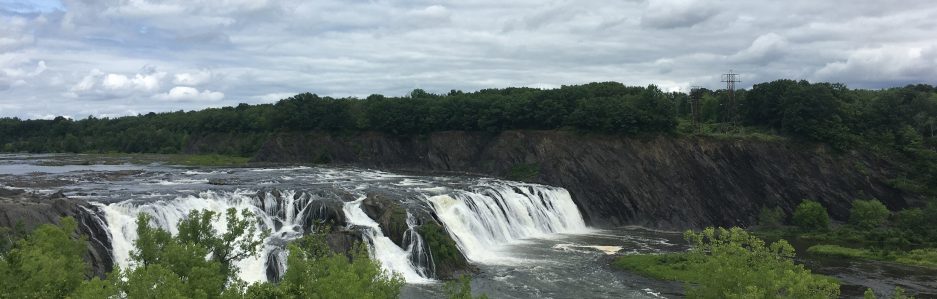
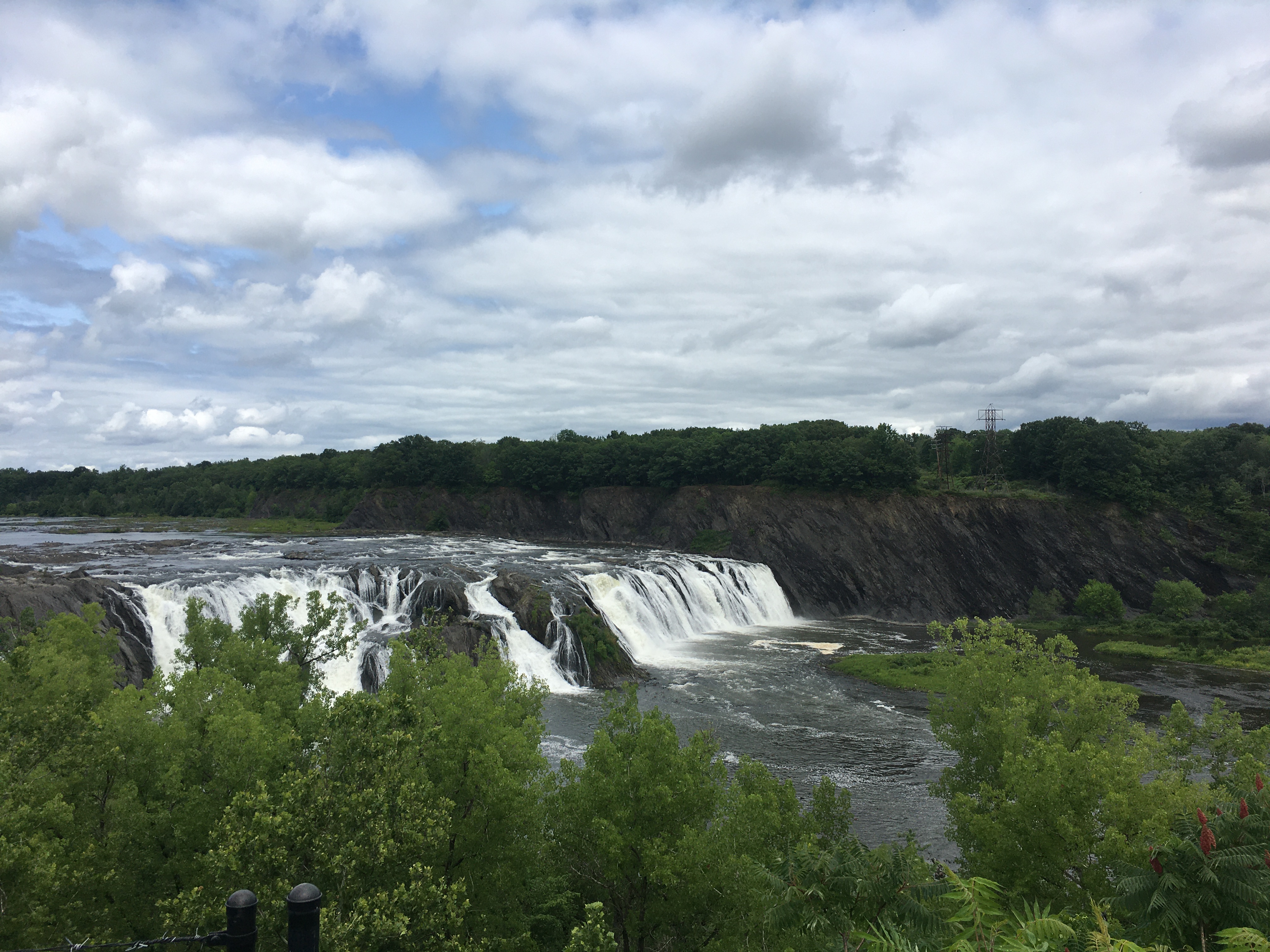
Photo of Cohoes Falls taken from Falls View Park
Cohoes Falls, north of Albany, NY; photo taken during lower flow of the summer season

Many people may not be aware of it, but just north of Albany is the second largest waterfall in New York State (and one of the top three east of the Rocky Mountains): Cohoes Falls. Shared by the city of Cohoes and the town of Waterford, NY, the falls are approximately 1,000 feet across and up to 90 feet high; there is excellent viewing access from Falls View Park in Cohoes, which has interpretive signage explaining the history of the falls and its use for powering the nearby mills in the late 19th century. Parking is available across the street, and the four acre park itself is accessible and includes ADA-compliant picnic areas and fishing platforms on the upper level near the pedestrian bridge. If you look around across the street from the park, you’ll also see now-overgrown sections of the original Erie Canal – the interpretive signage includes a map of where the Erie Canal originally ran through Cohoes, and the Spindle City Historical Society has an excellent self-guided tour of canal history in Cohoes on their website.

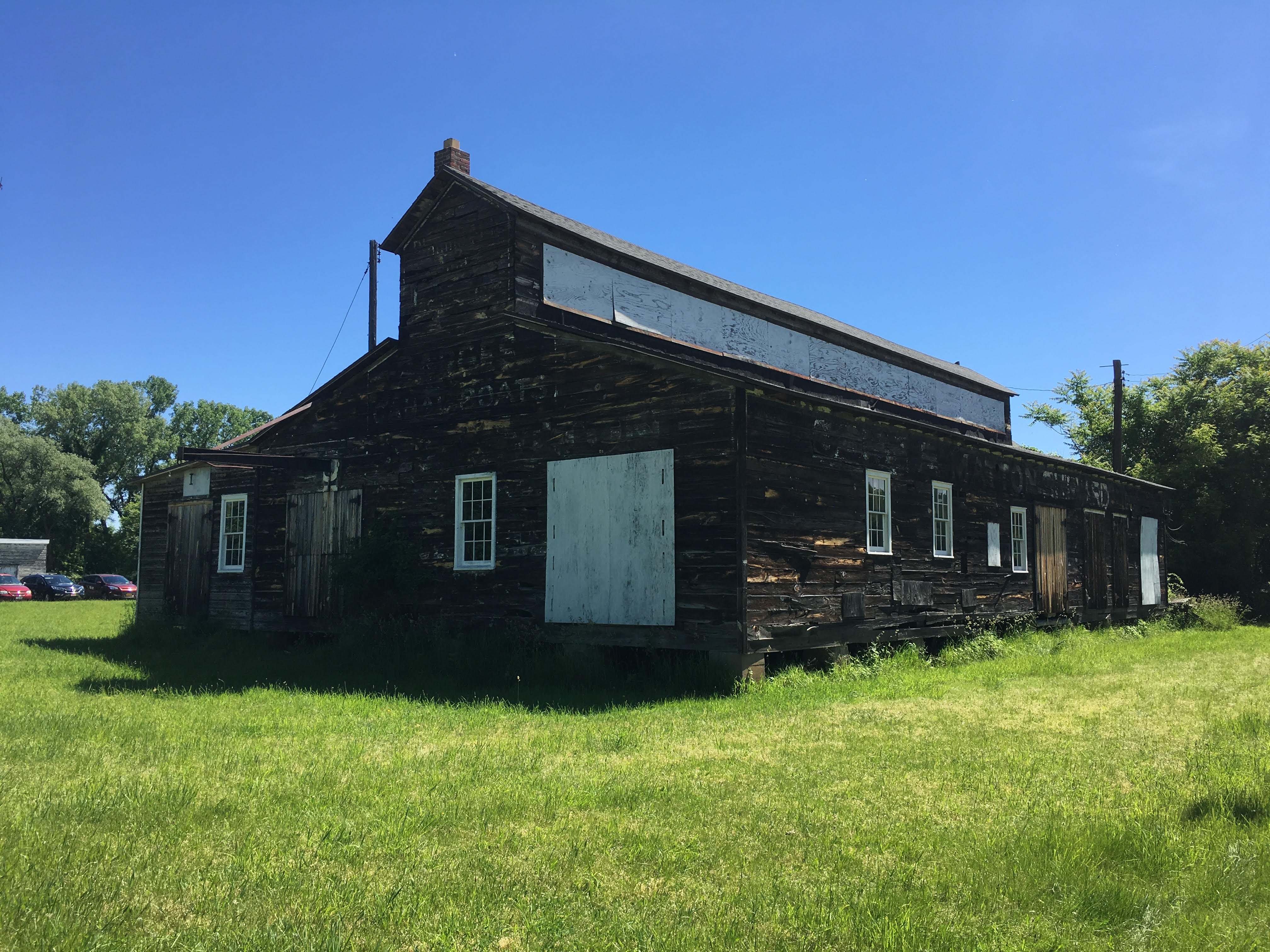
Moving onward from the Cohoes Falls, the point where the Erie Barge Canal meets the Hudson River is a short drive away in Waterford, NY. I recommend following the Mohawk River east and crossing to Van Schaick Island on Ontario Street, where you’ll make a left onto Railroad Drive. After passing the apartment complexes, as you approach Peebles Island you’ll see the historic Matton Shipyard on the right hand side (It’s worth stopping for a look, though there is currently no public access). Canal boats, barges, tug boats, and even submarine chasers were built here from 1916 until it closed in 1983. The Erie Canalway National Heritage Corridor has plans for its preservation and revitalization– watch this space!

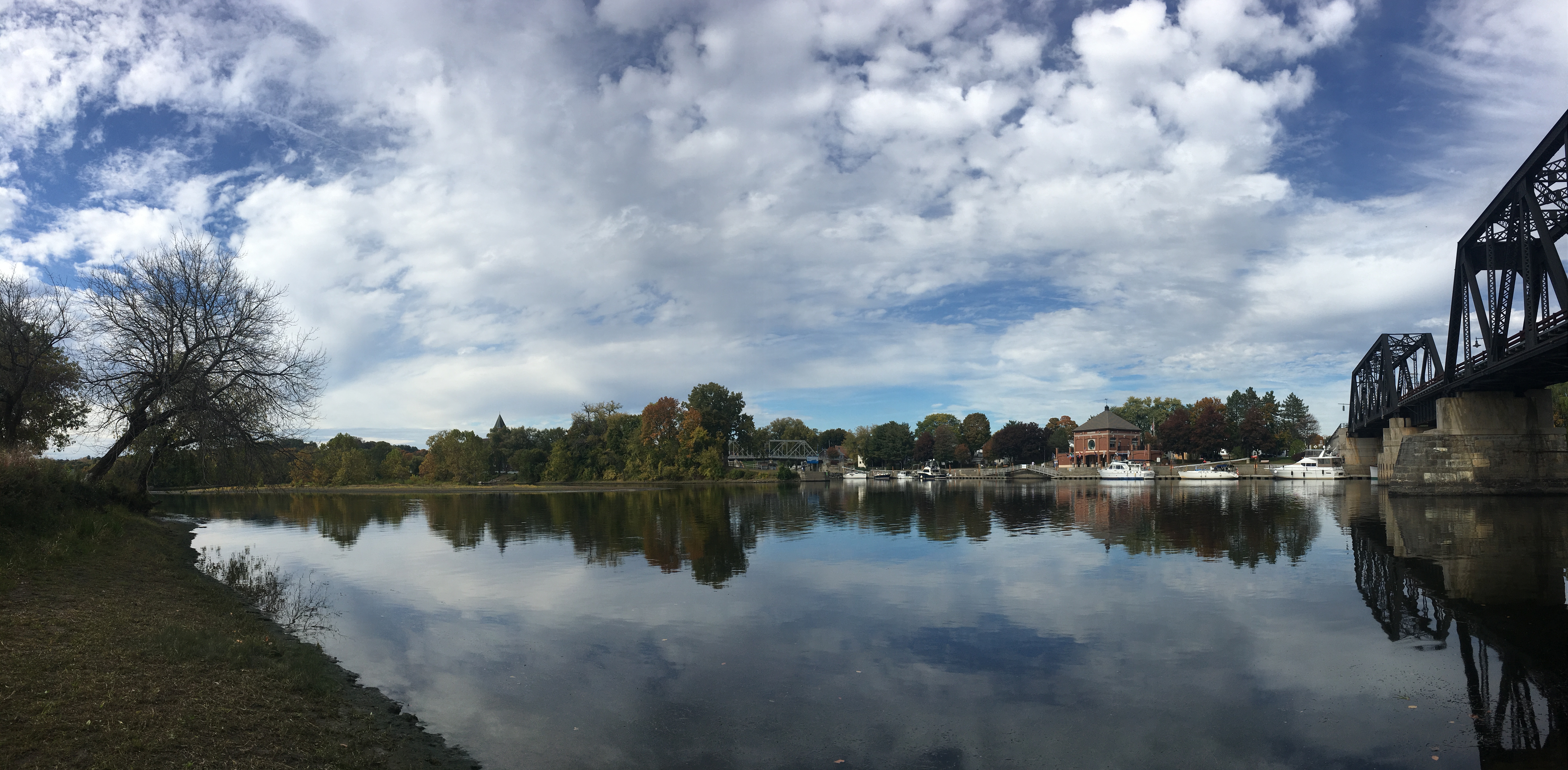
Mohawk River looking across to Waterford Harbor with boats and bridge
View of the Waterford Harbor visitor center and Erie Canal Lock 2 from Peebles Island state park

Approaching Peebles Island from this side gives you an easy opportunity to stop off in the park if you have time; Peebles Island State Park has excellent walking trails, a very informative visitor center of its own, public restrooms, picnic areas, and kayak access as well as some pretty good fishing along the Mohawk River (watch out for the eels and catfish!). Driving across the bridge from Peebles to Waterford provides a great view of the Waterford harbor visitor center and Erie Barge Canal Lock 2, where the canal splits off from the Mohawk River and climbs the ascent parallel to the Cohoes Falls by way of the Waterford Flight of Locks. The visitor center is a good stop, too: Erie Canal and Waterford-related merchandise available for tourists and locals alike, with very helpful staff, lots of local information and a farmer’s market on the weekends.

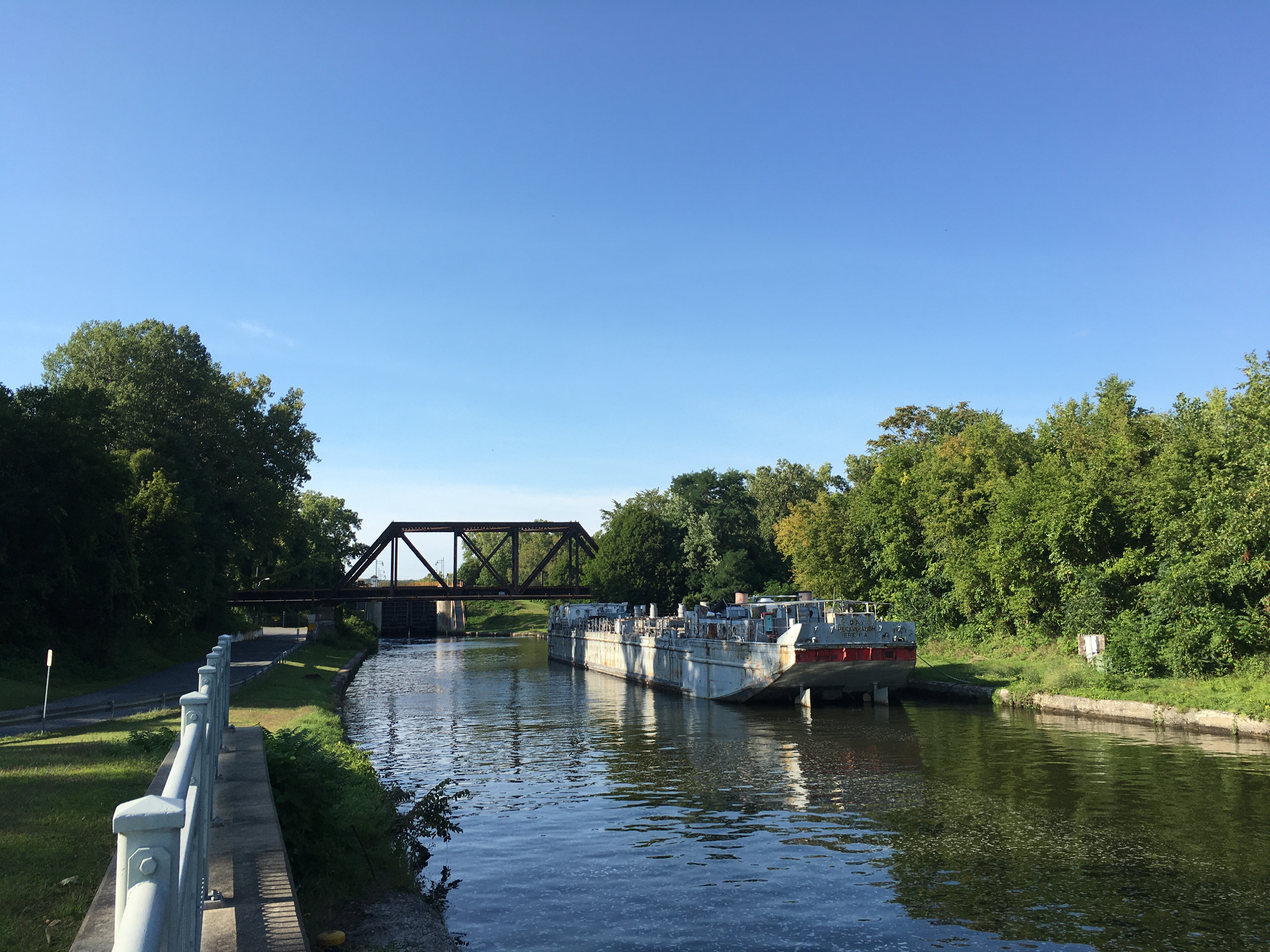
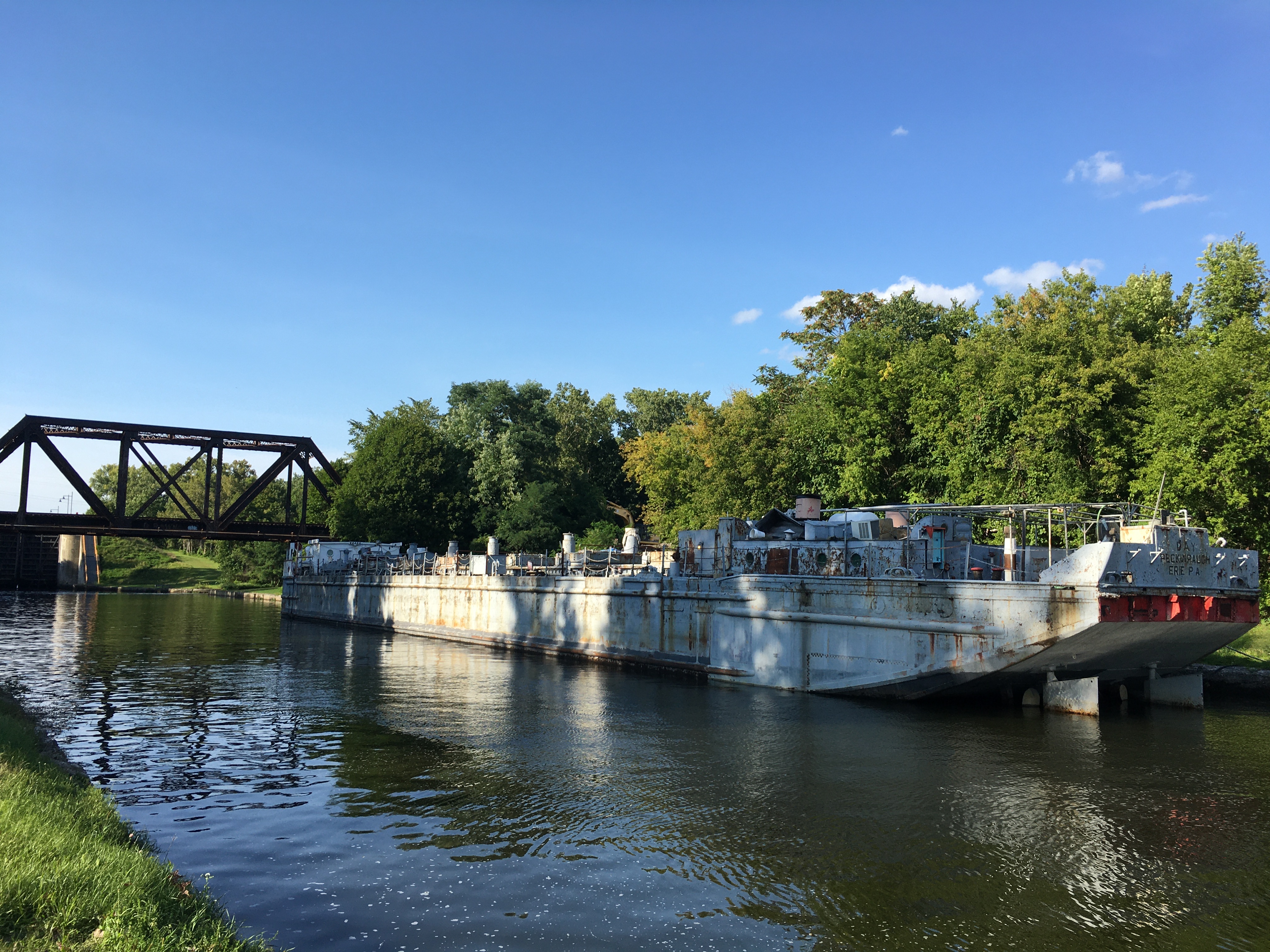
Canal ship Day Peckinpaugh tied up on the Erie Canal
The Day Peckinpaugh tied up near Lock 3

If you’ve gotten your fill of the harbor and maybe wandered over to Lock 2 for a look at any boats passing through, the next point of interest is a favorite story of mine: the Day Peckinpaugh, which can most often be found tied up near Erie Barge Canal Lock 3 in Waterford. Built in 1921 specifically for use on the Barge Canal1 and the Great Lakes, she was the first specifically designed for such use and now the last survivor of a fleet of over 100 of her type that carried freight from the upper Midwest across New York State to the port of New York City. Rescued from the scrap yard in 2006 by a partnership of museums and canal preservation societies, she is now the largest artifact in the collection of the New York State Museum. Parking is available just off 9th Street (on the access road to Lock 3) if you want to stop for a better look at the Day Peckinpaugh across the canal.

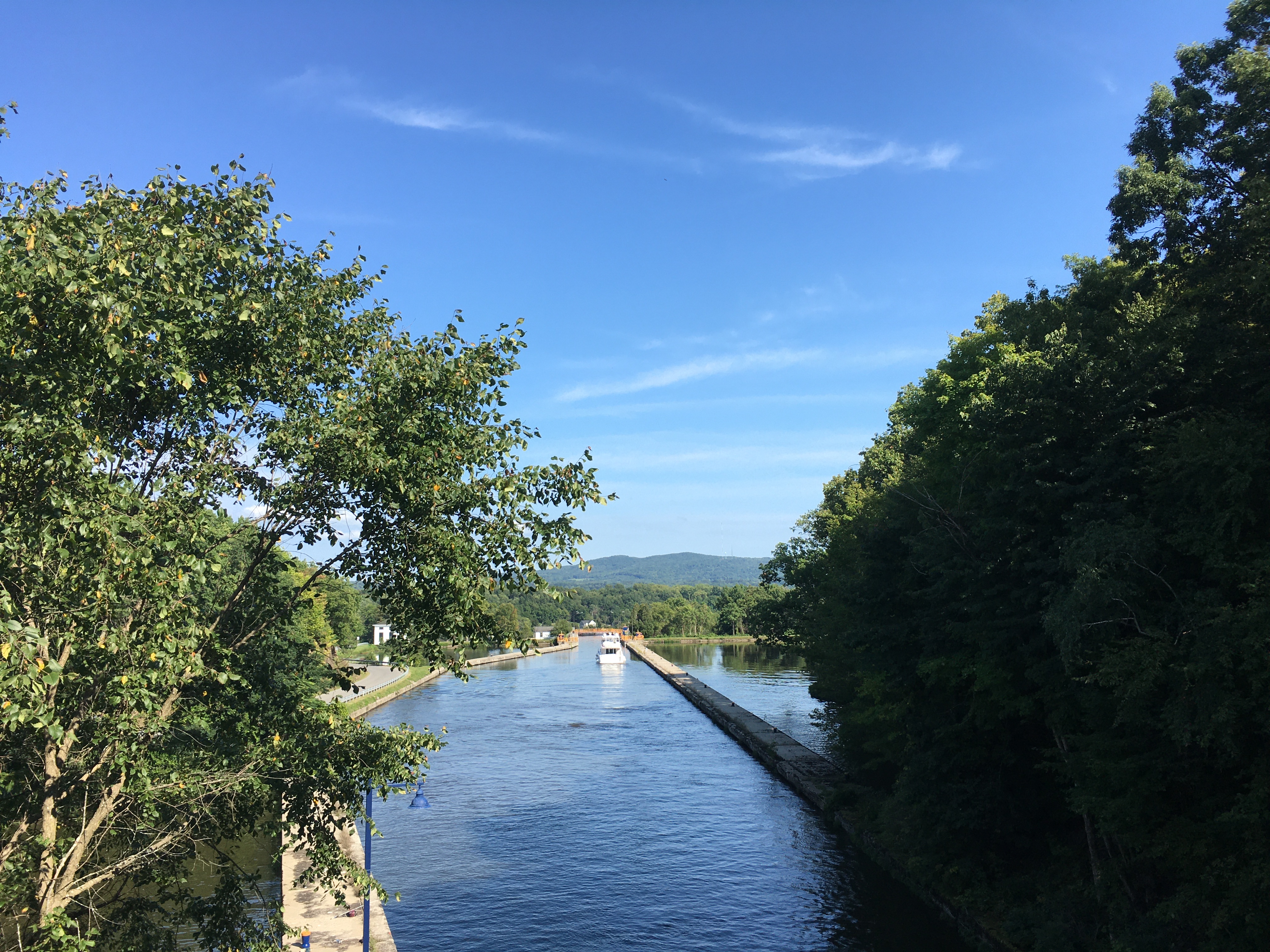
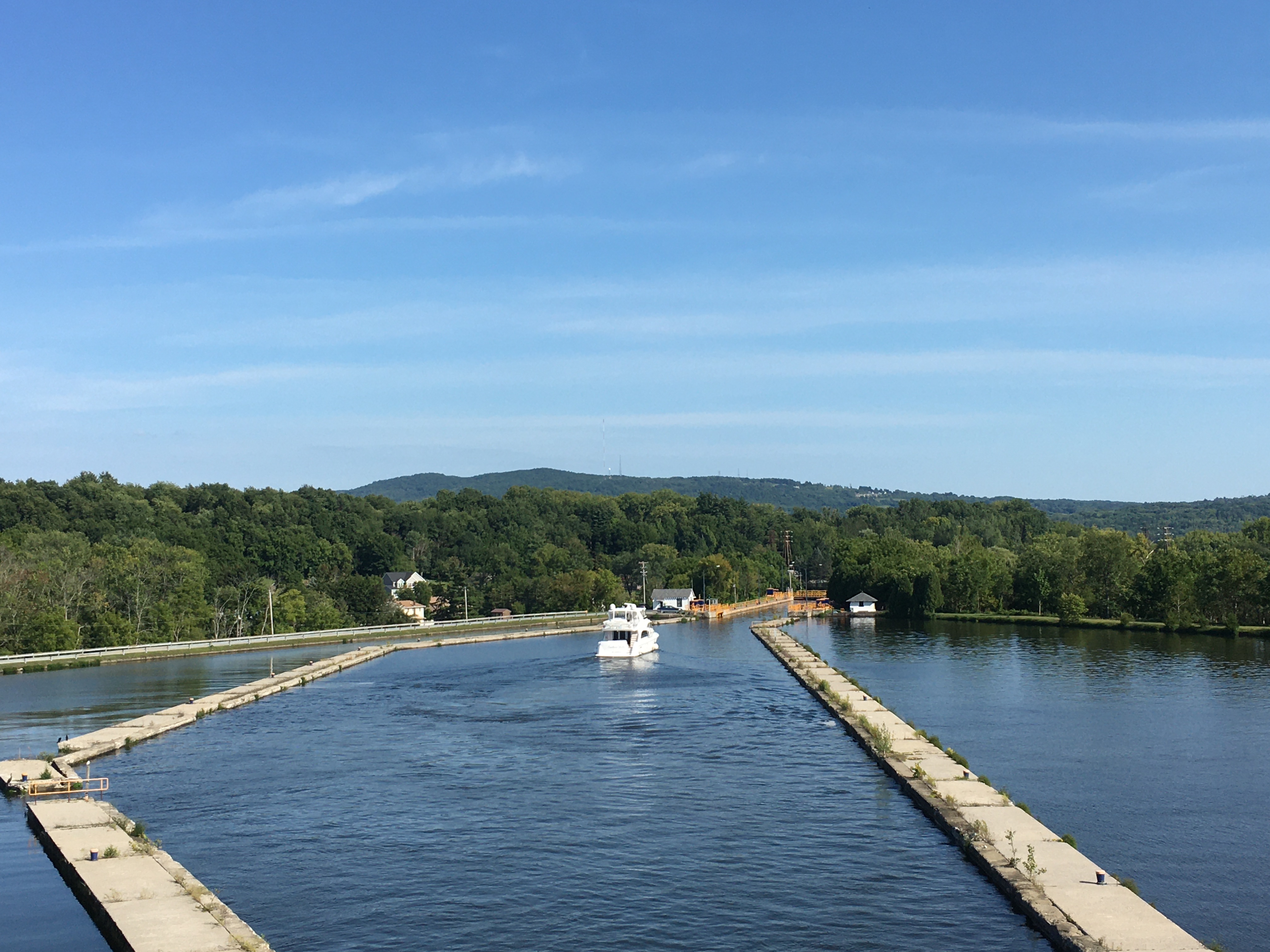
Boat passing through the Erie Canal
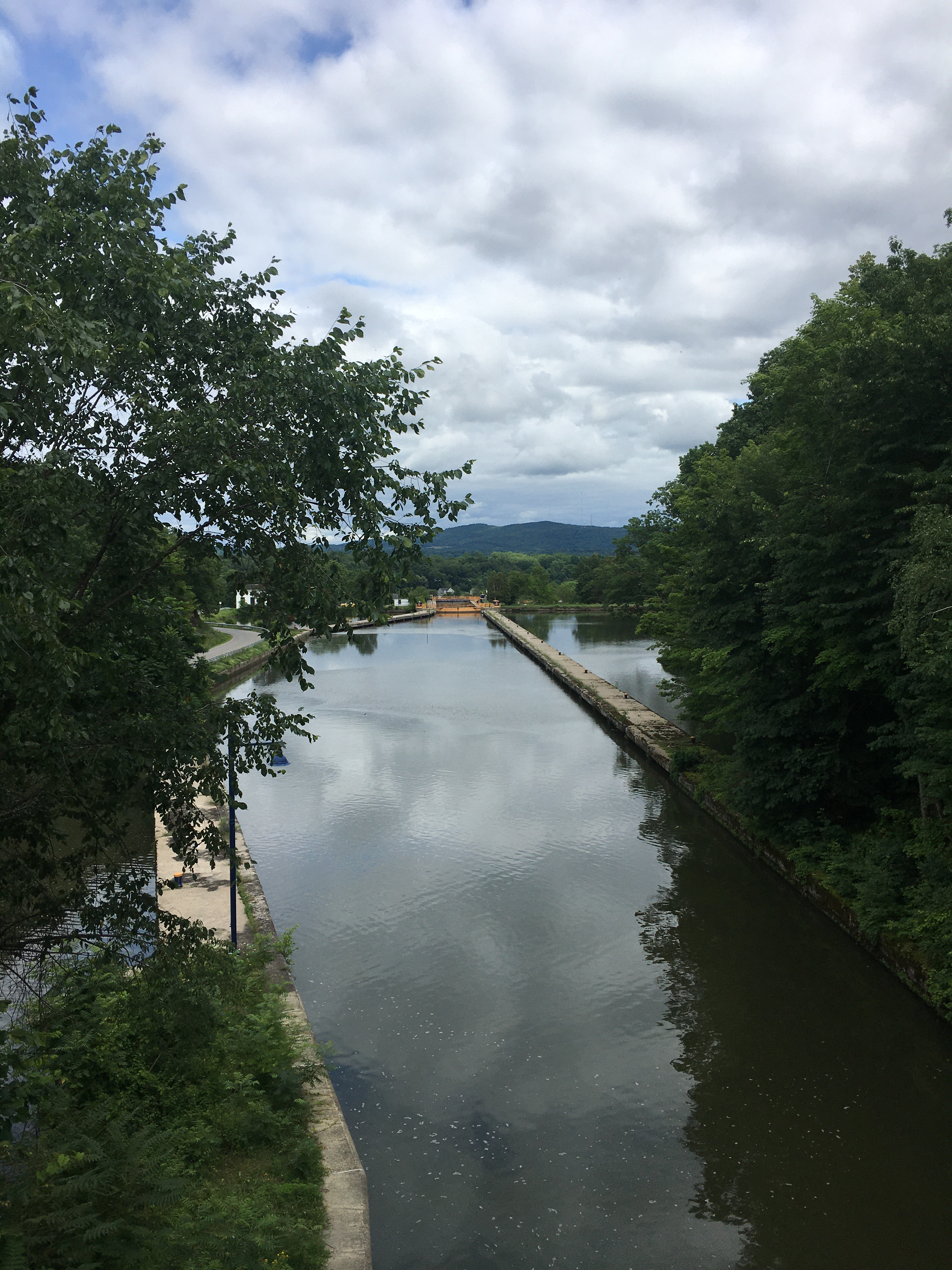
View from Erie Barge Canal Lock 6

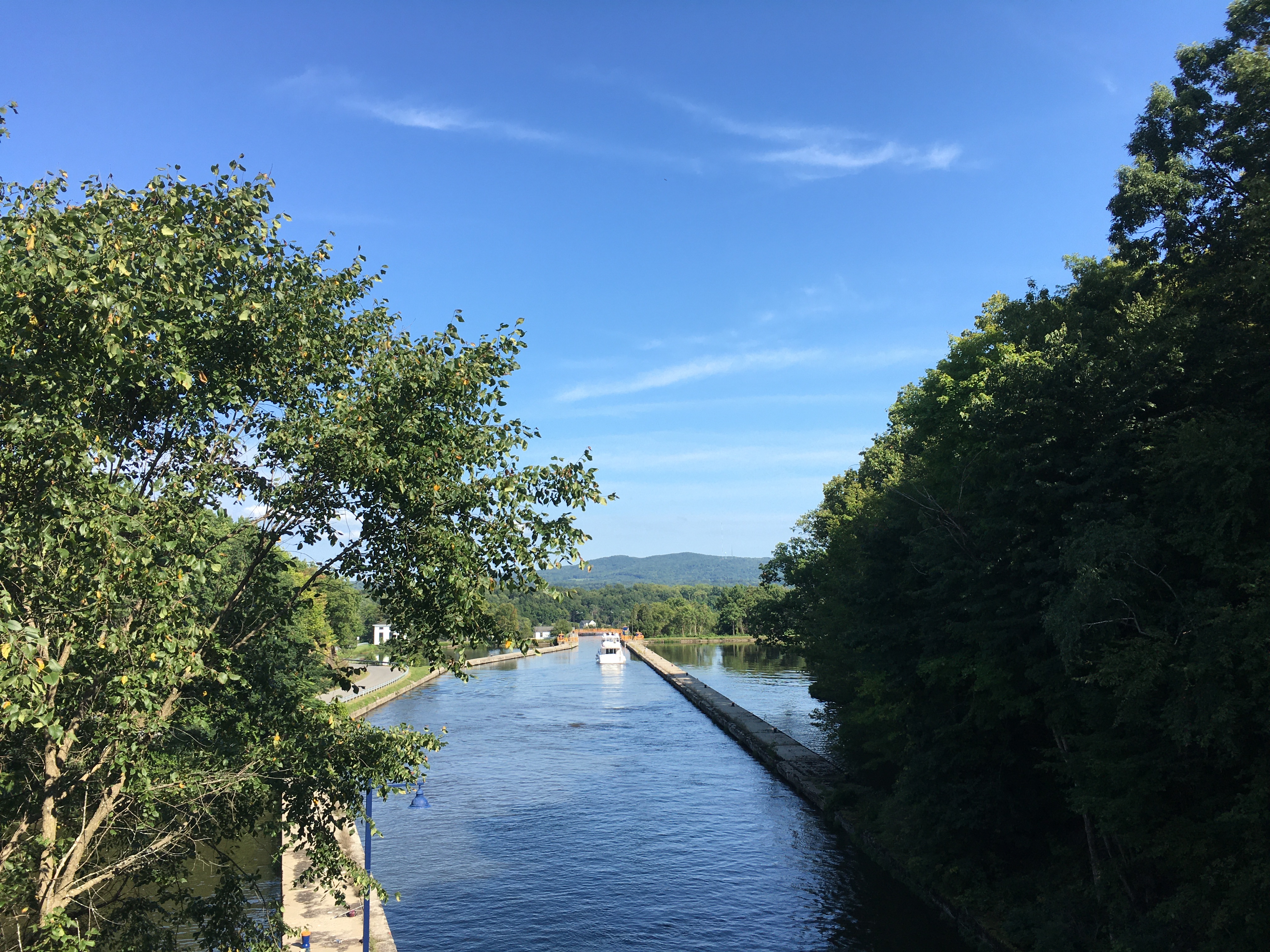
Last but certainly not least, we head on up the Waterford Flight of Locks by taking 9th back across the bridge and making a quick left on 8th street, another left on Washington Ave to a left on Flightlock Road. Take this one slowly, because there are frequently pedestrians, cyclists, and oncoming vehicles that may not be thinking about other traffic. There are 3 locks in quick succession along Flightlock Road, and if you’re lucky to catch a boat going through and quick enough to keep up with it, you can watch all three locks in operation (frequently the Canal Corporation staff operating the locks are happy to chat with visitors, too!). The Waterford Flight as a whole refers to Erie Barge Canal locks E-2 through E-6, which raises boats a total of 169 feet over the span of a mile and a half; it remains the flight with the highest elevation gain for its length of any canal lock system in the world. It’s also a pretty fine view from the bridge across the lock on a nice day.

  1. I frequently refer to the Barge Canal vs. the original Erie Canal here; the original Erie Canal was built between 1817 and 1825, with its course from Albany running through Cohoes, NY. The canal was later enlarged (the “enlarged Erie Canal” between 1836 and 1862 to accommodate greater traffic. Between 1905 and 1918 the canal was once again overhauled, this time changing its path in many places to use “canalized” natural waterways, and increasing its dimensions to about 150 feet wide by 12 feet deep.

A visit to downtown Albany, NY

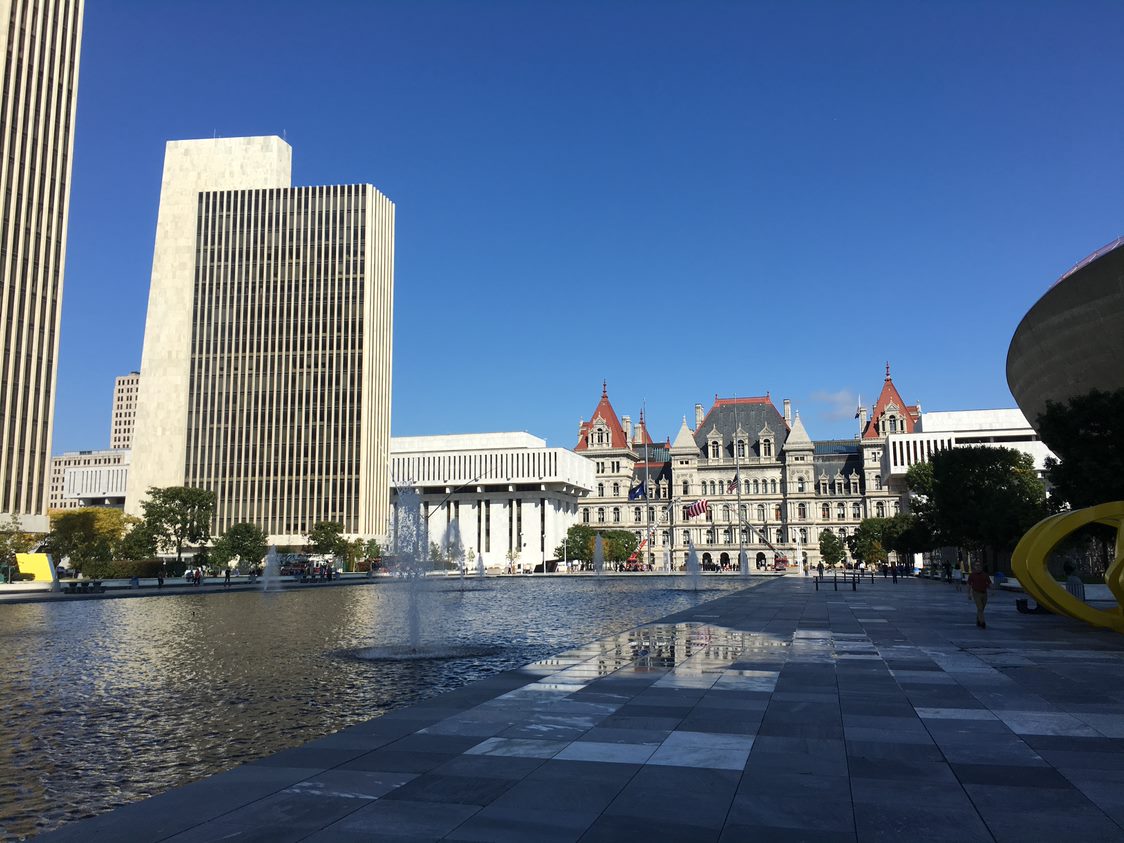
Empire State Plaza reflecting pool and view to New York State Capitol building

Recently I’ve noticed that there seem to be more visitors around the Empire State Plaza these days (presumably since travel abroad isn’t feasible for many at the moment), and I always want to stop and give them suggestions on where to go (but I’d rather they not think I’m nuts); I also had the opportunity recently to share with a co-worker some ideas on things for visitors to do in the area, so I thought it might be worthwhile posting some ideas here as well for anyone who might find it (hello, potential visitor to Albany! It may not look like much, but there are some fun things to do on a trip to downtown that you might not have noticed).

View up from the base of the Corning Tower Building at a mostly cloudless sky
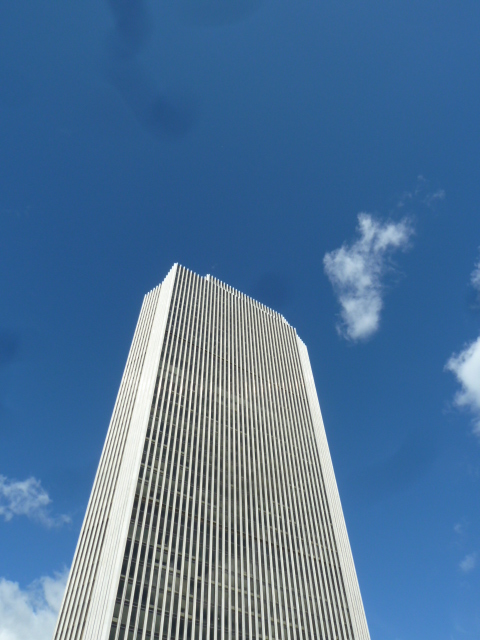
Looking up at the Corning Tower

A visit to the Observation Deck in the Corning Tower building at the Empire State Plaza

The Corning Tower state office building is the tallest skyscraper in New York State outside of New York City, and features an observation deck that gives excellent views (with informational signage) of the surrounding region. The elevator to the observation deck on the 42nd floor of the Tower reaches speeds of 16mph, and is accessible from either the plaza or concourse levels (from the concourse, you’ll have to take the escalator to the plaza level to get the elevator). The observation deck is open to the public for free Mondays through Fridays from 10am to 4pm.

A walk around the State Museum

Growing up in the Albany area I just assumed that all states had a state museum in their capital; it turns out that that assumption may not be true! The New York State Museum is run by the state Education Department and features ongoing exhibitions about the history, natural features, and development of the state of New York. It also has a variety of temporary exhibitions that change regularly; and if you venture up to the 4th floor (when it’s open) there’s a carousel for children of all ages to ride.

The New York State Executive Mansion on Eagle Street was built in 1856 as a banker’s private home; it was purchased by the state two years after Governor Samuel Tilden began living in it in 1875. Tours of the Governor’s mansion are available for free to members of the public by making reservations two weeks in advance – check the website or call for additional information.

Take a look around the Cathedral of the Immaculate Conception, built 1848-52 (and on the National Register of Historic Places), the mother church of the Albany Catholic diocese and a remarkable part of the Albany skyline, with its Gothic towers (tours available by making arrangements in advance).

The New York State Office of General Services also offers 45-minute tours of the Empire State Plaza for free on Wednesdays, Thursdays, and Fridays at 2pm; reservations are (currently!) required. Highlights include “The Egg Center for the Performing Arts, the Plaza’s main platform, Capitol, Robert Abrams Building for Law and Justice, Cultural Education Center, Corning Tower, Legislative Office Building, and agency buildings, as well as the memorials that honor those who have dedicated or given their lives in service to others”, as well as the Empire State Plaza Art Collection.

The Capitol V
New York State Capitol

The New York State Capitol is also open for public tours; guided tours are available at 10am and 12pm on weekdays, or you can choose to wander around on a self-guided tour. The Capitol was built of solid masonry over 32 years, completed in 1899; it was the most expensive government building of its time, and houses the New York State legislature.

It’s worth stopping to have a look at the Art Deco interior of the lobby at the Alfred E Smith state office building at the corner of South Swan Street and Washington Avenue (the Fort Frederick apartments were moved down the road to make way for this building in the 1920s) en route to or from the Albany Institute of History and Art, which has an excellent collection including many works by the Hudson River School painters of the mid-19th centure.

The Empire State Plaza gift shop has an excellent variety of souvenirs produced from across New York State, and can be visited from the concourse level of the plaza (accessible by steps down from the plaza, from Madison Avenue, or by underground walkway from the Capitol building).

Looking for something to eat, there are plenty of excellent options- Logan’s deli on the concourse has good options for everyone, as does A Better Bite on the corner of Washington and South Swan. And while the Hamilton Cafe is a little further off the beaten path on Hamilton Street off Swan, their daily specials are locally popular. If you’re looking for a great breakfast option, the Iron Gate cafe will fit the bill and fill your stomach.

Parking and public transportation: Parking for a $10 daily fee is available in the visitor lot under the Plaza, which is accessible from the 787 Plaza exit ramp or from S. Pearl St. and turning on to Market Street to merge onto the ramp/South Mall Arterial from 787; payment is accepted by credit card only. Alternatively, a small visitor lot is available on Madison Avenue on the north side of the Cultural Education Building (state museum). On-street meter parking is also available on many side streets or on State Street or Washington Ave; payment may be made at the meter or via an app. The Plaza and surrounding area are also easily accessible from many points in the Capital Region by CDTA bus; check their routes and schedules at cdta.org.

Happy Maple Weekend!

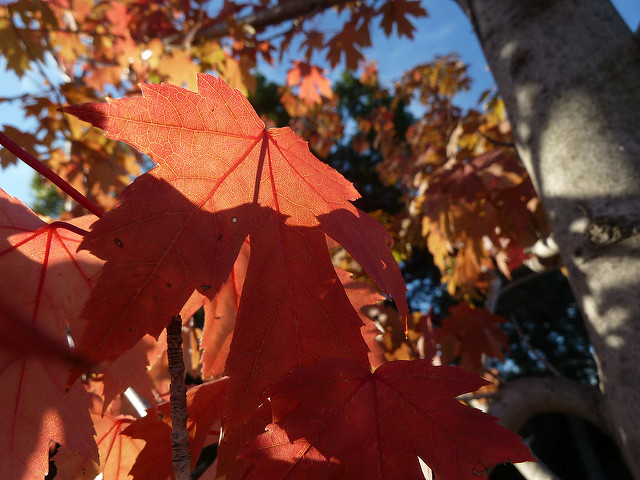
maple leaves

It’s time to celebrate the New York State tree – the sugar maple. The sugar maple was adopted as the state tree for the Empire State in 1956. This weekend (and last, though many of us were too busy celebrating St. Patrick’s Day to notice) is the 23rd annual Maple Weekend – when maple farms across New York State invite the public to come tour their maple farms and see firsthand the process of producing maple syrup and related products. The Maple Producers Association also has a comprehensive list of pancake breakfasts available this weekend to try your New York maple syrup, as well as an interactive list of participating maple farms to visit. Check their website for more details.

A healthy new year

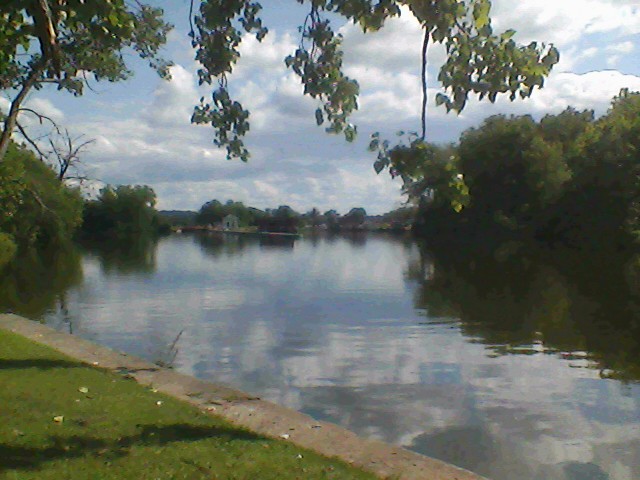
Rensselaer Lake

Often when one thinks of new year’s resolutions, a common resolution that comes to mind is to exercise more, get fit, or lose weight. In the spirit of starting as you mean to go on- why not get outdoors on New Year’s Day?

Most states offer First Day Hikes in state parks- the perfect way to get out for a stroll and enjoy your local park. A number of them include seasonal refreshments (hot cocoa, warm apple cider or snacks). If you’re in Massachusetts, the flyer from the Department of Conservation and Recreation is here; New Yorkers, check out the info on the New York State Parks website here.

And if you’re in the Boston area and prefer to add time on the water to your hike this year, the Friends of the Boston Harbor Islands are having their annual Seafarers’ Cruise on Sunday – this year the trip is going to Thompson Island (don’t worry, the boat is heated).

Upstate New York: Mohawk Hudson Bike/Hike Trail

Mohawk Hudson Bike-Hike Trail Rotterdam 2

The Mohawk Hudson Bike/Hike Trail is a 36.8-mile trail that runs from Steamboat Square in downtown Albany to Rotterdam Junction in Schenectady County, and makes up the easternmost portion of the Erie Canalway. Sections of the trail are frequently quite busy with walkers, runners, and dog-walkers all enjoying the route. Much of it is a rail trail, created from sections of the old Troy & Schenectady Railroad. For those planning a visit, there’s a handy list of access points (with details about parking) on the website of the Friends of the Mohawk Hudson Bike/Hike Trail. The trail has a number of scenic views of the Erie Canal, passes by multiple canal locks and also offers beautiful views of farmland and wooded areas.

This slideshow requires JavaScript.

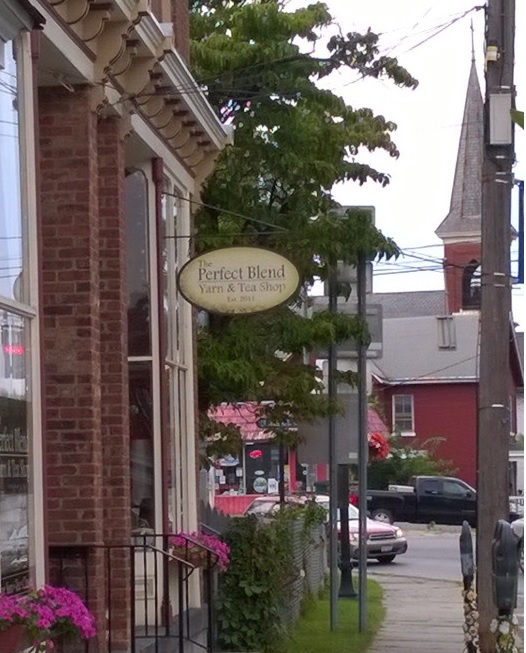
One for the fiber enthusiasts – Perfect Blend yarn shop, Saugerties NY

perfect-blend

If you’re going to the New York State Sheep and Wool Festival in Rhinebeck this year (more commonly known simply as “Rhinebeck”), a quick detour to the Perfect Blend Yarn and Tea Shop in Saugerties NY is well worth the trip. It’s a lovely little shop, with tea samples and all manner of delightful yarn (including the much-loved Madeline Tosh). The staff are friendly, and there’s even a table and chairs to sit and rest a while (and maybe cast on a new project while you’re at it).


It also happens to be down the road from the gorgeous Saugerties Lighthouse, which is a worthwhile trip in and of itself, and benefits from easy walking to cafes and independent bookstores nearby- click here for more information about Saugerties to help plan your visit.

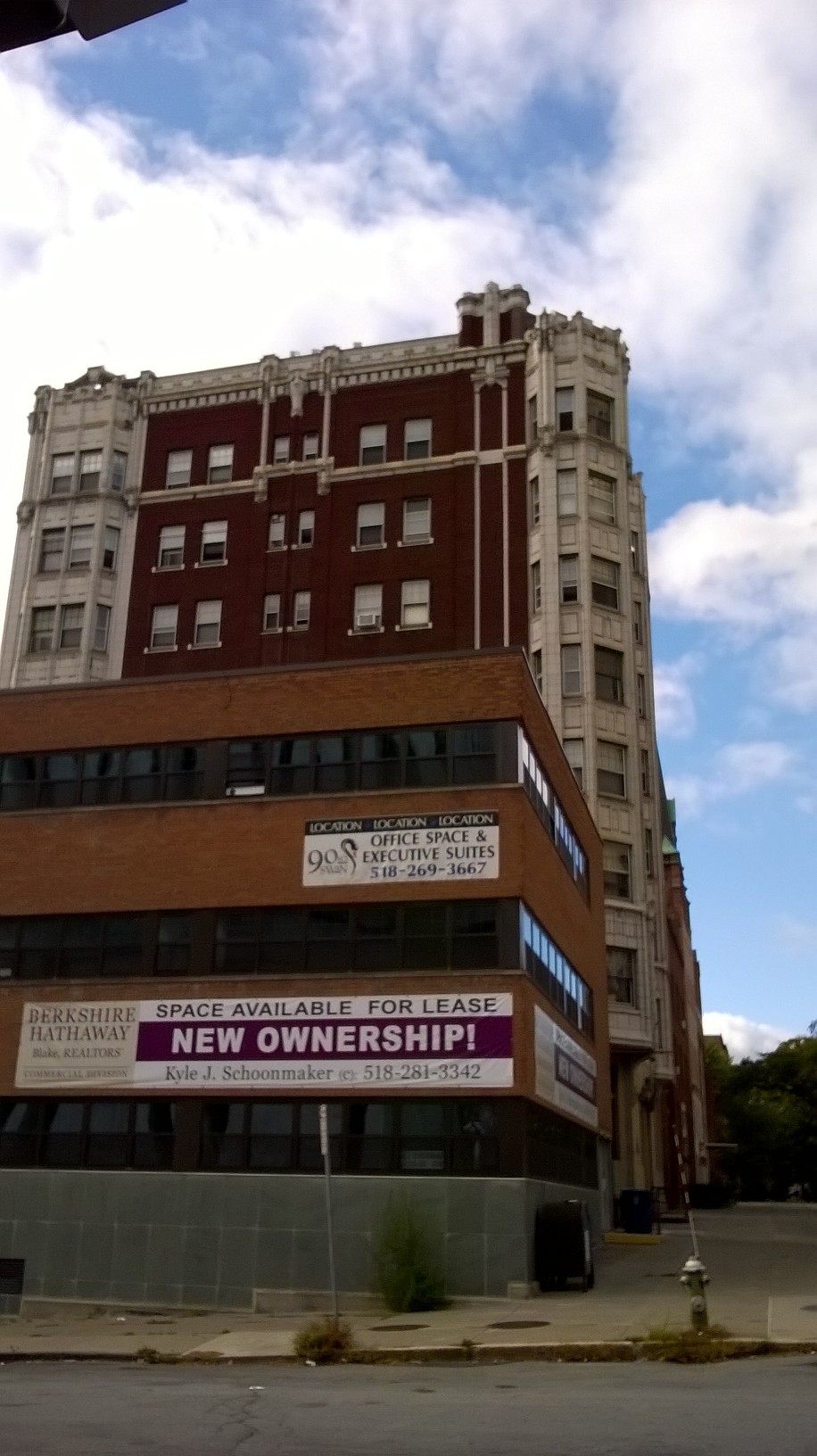
Architectural trivia: Albany, NY – Fort Frederick Apartments

fort-frederick-apts-behind-office-building

Behind a (probably half-empty, I’m guessing) office building on Swan Street in downtown Albany NY is the apartment building that is the subject of one of my favorite “wait, what?” stories in the area. The Fort Frederick apartments were completed in 1917 at the corner of Swan Street and Washington Avenue. In the mid-1920s, when it was determined that a building needed to be built to house New York state government offices that were scattered around the city, the powers that be decided that location conveniently across from the Capitol building would be ideal for a brand-new skyscraper, now known as the Alfred E. Smith building (on the National Register of Historic Places, that building is an interesting Art Deco structure itself). So they did what any reasonable person might immediately think to do: they moved it a block away. According to Albany Architecture: A Guide to the City (ed. Diana S. White, pub. 1993, Mount Ida Press),  “J.W. and J.P. Eichleay of Pittsburgh jacked the eight-story structure up two feet and placed it on several hundred steel rollers laid on railroad tracks. It was then gently propelled 350 feet south by two teams of horses and two winches at a rate of seventy feet a day.”. And they didn’t even break a single pane of glass.


Amazing.

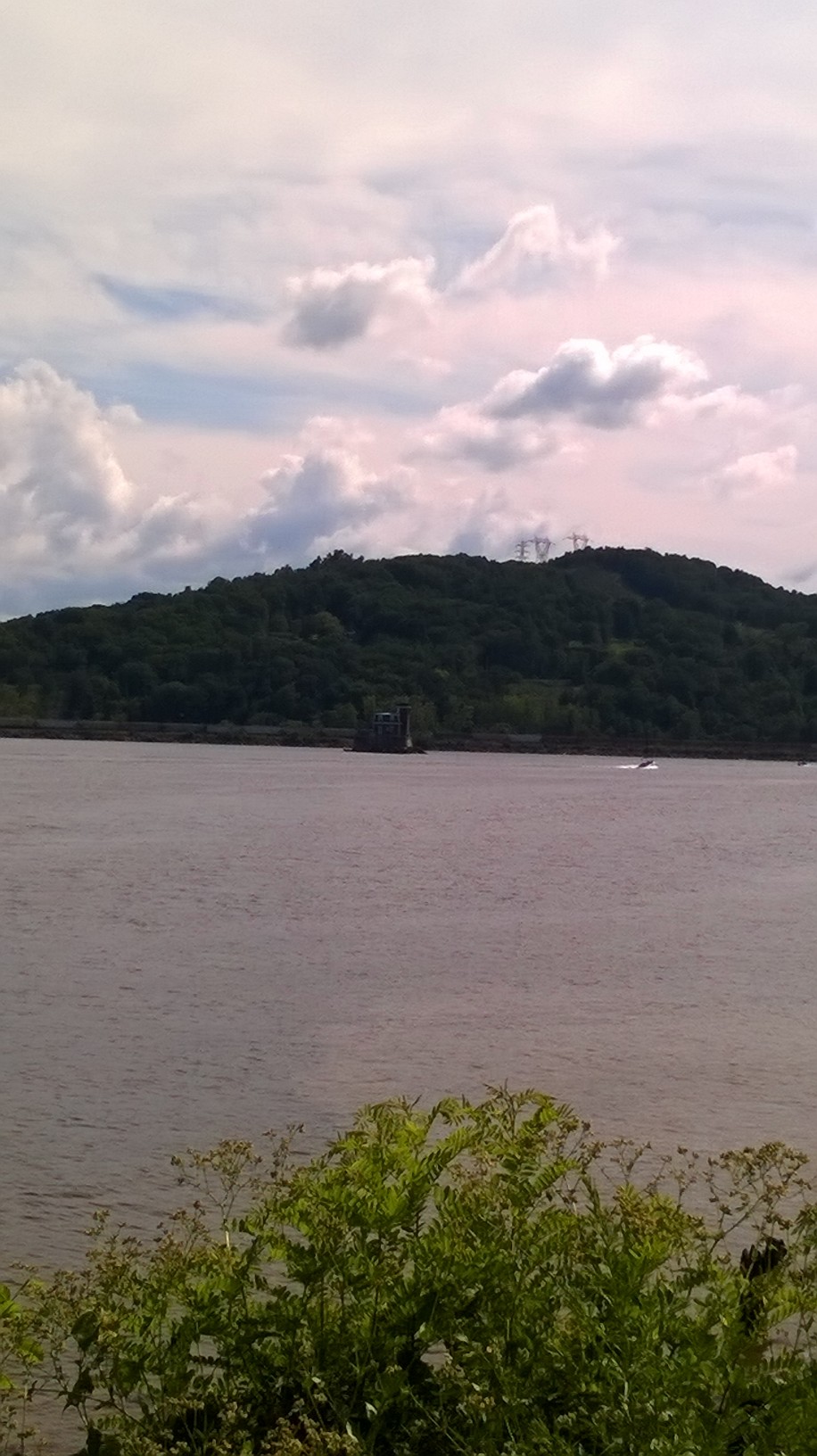
Hudson Valley postcard: the Hudson-Athens lighthouse, Athens NY

WP_20150823_15_03_25_Pro

Typically the first place I expect to see lighthouses is by the ocean. So when I heard people talking about lighthouses in landlocked upstate New York, I was initially a bit surprised- but naturally, there are lighthouses on the Hudson (as on any navigable river and even some large lakes, like the Great Lakes). For anyone interested in lighthouses on the Hudson, Kevin Woyce’s book “Hudson River Lighthouses and History” is an excellent source for histories of the lighthouses along the Hudson from New York Harbor to Coxsackie. Continue reading